
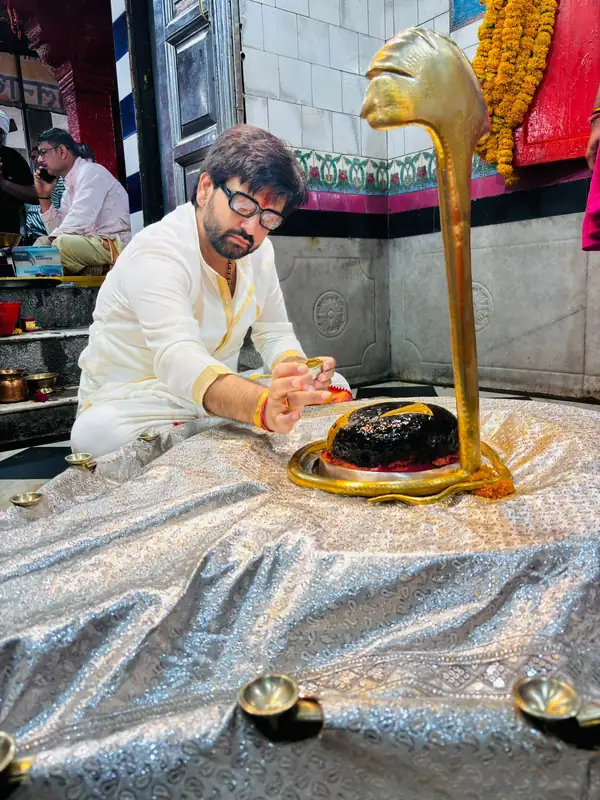
Mangal Dosh Puja in Ujjain
The shanti families book after kundli matching shows Manglik Dosh — done where Mangal is worshipped as Mangalnath.
Mangal Dosh is the single most common thing families hear during kundli matching, and the least explained. Here is what it actually means, in plain words — which houses cause it, when it cancels, and what people traditionally do about it.
A birth chart has twelve houses. When Mangal — the planet Mars — sits in the 1st, 4th, 7th, 8th or 12th of them, the chart is called Manglik and the placement is called Mangal Dosh. It is also known as Kuja Dosh, Bhauma Dosh and Angarak Dosh. South Indian traditions usually count the 2nd house too.
| Mangal in | House of | Traditional reading |
|---|---|---|
| 1st house | Self and temperament | A forceful, quick-tempered nature |
| 2nd house | Family and speech | Sharp speech within the household |
| 4th house | Home and peace of mind | Restlessness at home |
| 7th house | Marriage and partnership | Strong will meeting strong will |
| 8th house | Longevity and in-laws | Looked at closely in matching |
| 12th house | Expense and rest | Spending and disturbed rest |
These are tendencies an astrologer weighs, not predictions. The same Mangal that makes a person impatient also gives courage, discipline and the energy to build things.
Astrologers speak of the dosh as full when Mangal is strongly placed in one of these houses with nothing to soften it, and as anshik — partial — when it is weak, or seen from only one of the three reference points (lagna, Moon and Venus). An anshik dosh is generally treated lightly.
A large share of Manglik charts carry a cancellation, called dosh bhang. Commonly cited conditions include:
This is why a software report that simply says "Manglik: Yes" is only half the reading. The whole chart has to be seen.
When the dosh stands and the family wishes to observe a shanti, the customary steps are:
These are acts of faith. They are done to seek steadiness and goodwill, and no puja can honestly promise a particular outcome in marriage or in life.
The Matsya Purana names Mangalnath in Ujjain as the birthplace of Mangal. Worshipping the graha at his own place of origin is the reason this temple has become the first name people hear when a Mangal puja is advised. The history of Mangalnath Mandir tells the story in full.
Unsure whether your chart is Manglik at all? Keep the date, time and place of birth ready and call +91 90099 66761. The pandit will read it and tell you plainly.
Last updated on .
Mangal Dosh, also called Manglik Dosh or Kuja Dosh, is read when Mangal (Mars) occupies the 1st, 4th, 7th, 8th or 12th house of the birth chart. Some traditions include the 2nd house as well.
It is read from the birth chart, which needs your exact date, time and place of birth. Astrologers check the position of Mangal from the lagna, and many also check from the Moon and from Venus.
Many astrologers hold that Mangal matures at 28 and its effect softens after that age. Others read the chart the same way at any age. It is one view among several, not a fixed rule.
Yes, and such marriages are common. Astrologers look at the complete matching of both charts, and at whether the dosh is cancelled, before giving their opinion.
The traditional observances are Mangal Dosh Nivaran Puja and Bhaat Puja, recitation of the Mangal mantra or Hanuman Chalisa, and fasting on Tuesdays. Which of these suits you depends on your chart.
The shanti families book after kundli matching shows Manglik Dosh — done where Mangal is worshipped as Mangalnath.
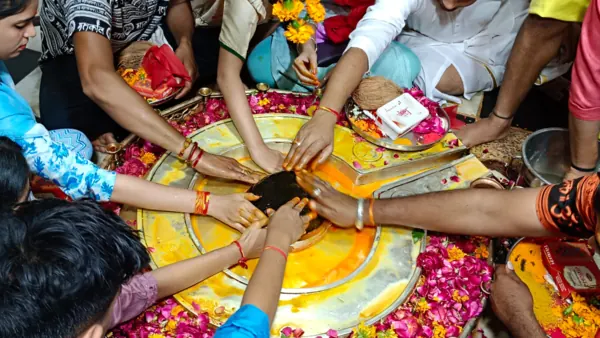
Cooked rice laid over the Shivling — the offering Mangalnath Mandir is known for across the country.
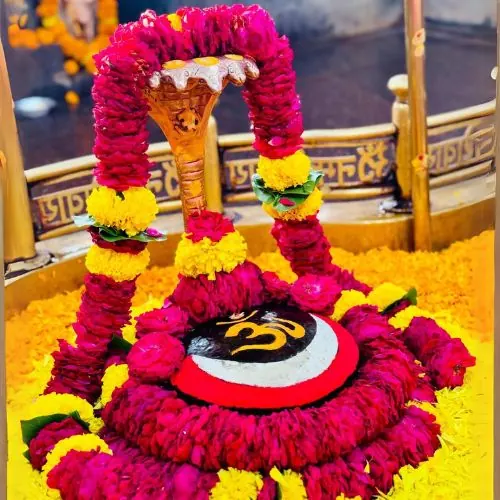
A Rahu–Ketu shanti with Naga puja, for a chart where every graha falls on one side of the nodal axis.
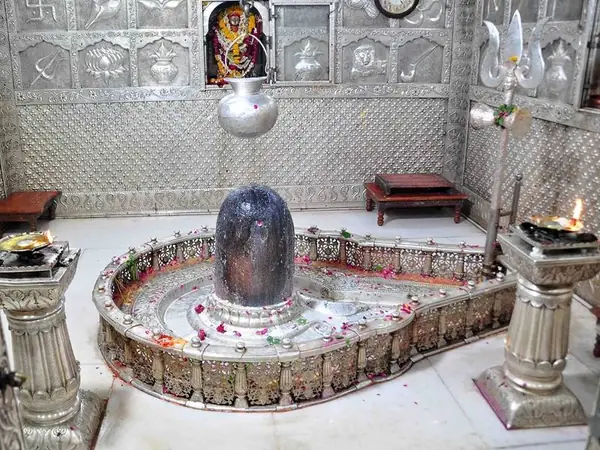
The Tryambakam mantra of Shiva recited in a fixed count by Vedic pandits, with abhishek and a closing havan.

Nine grahas invoked together — each with its own grain, colour and mantra — closed with a havan.
A short call tells you whether a puja is advised, and which one.