
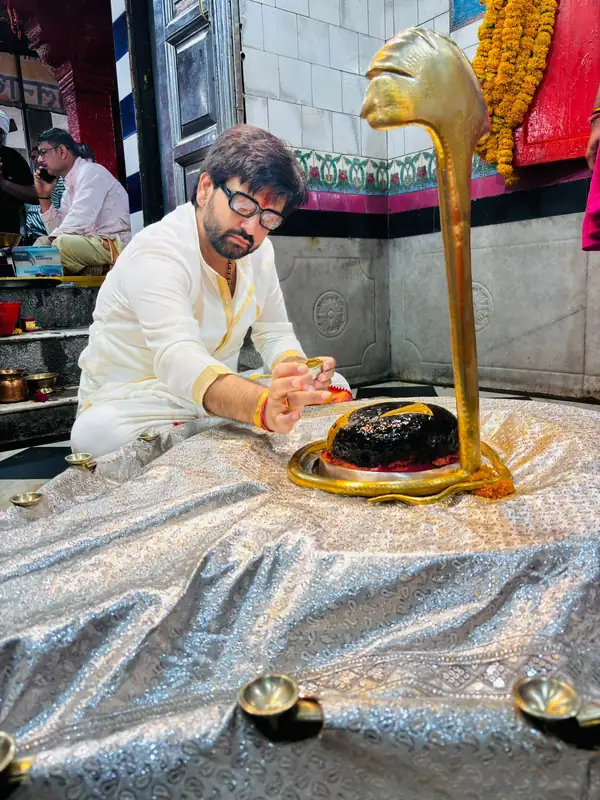
Mangal Dosh Puja in Ujjain
The shanti families book after kundli matching shows Manglik Dosh — done where Mangal is worshipped as Mangalnath.
The Mahamrityunjaya mantra is among the oldest prayers to Shiva, taken from the Rig Veda. Families ask for its jaap when someone they love is unwell, before a surgery or a long journey, or simply as a yearly prayer for the household. In Ujjain it is offered before the Shivling of Mangalnath.
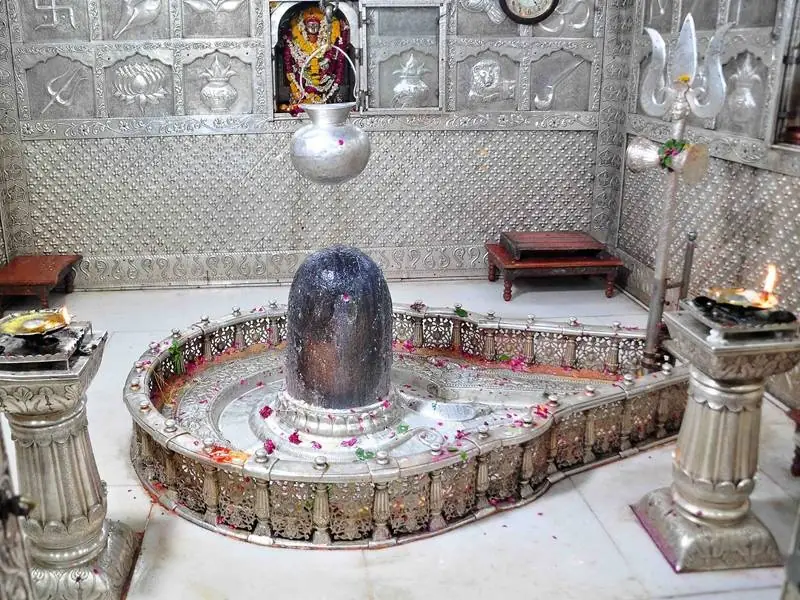
ॐ त्र्यम्बकं यजामहे सुगन्धिं पुष्टिवर्धनम् । उर्वारुकमिव बन्धनान् मृत्योर्मुक्षीय माऽमृतात् ॥
In plain words: "We worship the three-eyed one, fragrant, who nourishes all beings. As a ripe cucumber is released from its stem, may he release us from death — but not from immortality."
It is called the Tryambakam mantra after its first word, and the Mrita-Sanjivani mantra in the tradition of Rishi Markandeya and Shukracharya. Mahamrityunjaya means "the great conqueror of death" — a name of Shiva.
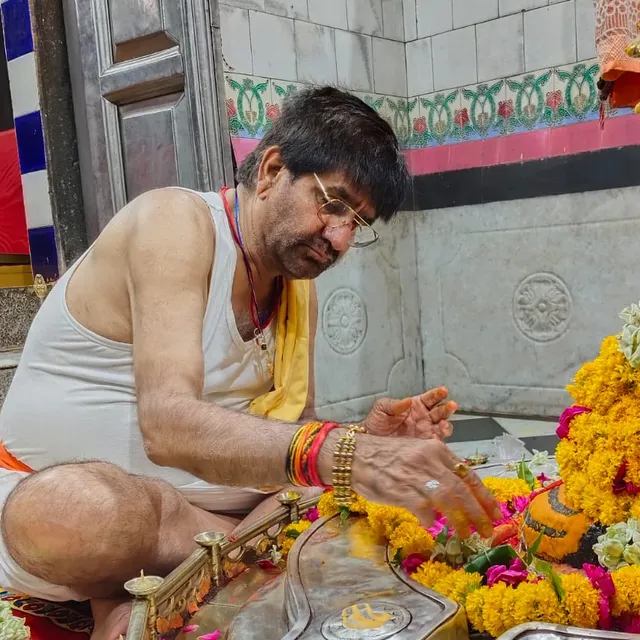
A jaap is the recitation of this mantra a fixed number of times by Vedic pandits, with a sankalp taken for a named person. The count is completed over one sitting or several days and is closed with a havan of one-tenth the count.
Usual duration: one sitting to several days, by jaap count. The order and the mantra count follow what the pandit reads in your kundli, so the timing is confirmed when you book.
| Count | Known as | Usually completed in |
|---|---|---|
| 1,100 or 11,000 | Laghu jaap | One sitting to one day |
| 21,000 or 51,000 | Madhyam jaap | Two to five days, by number of pandits |
| 1,25,000 | Sawa lakh jaap | Several days with a team of pandits |
The days needed depend on how many pandits sit together. The pandit suggests a count after hearing the reason for the jaap, and tells you the schedule and dakshina before it begins.
The dakshina depends on the vidhi your chart calls for — the number of pandits, the mantra jaap and whether a havan is included. It is told to you on the call, in full, before a date is fixed. Samagri is arranged at the temple, so you do not have to shop for it in an unfamiliar city.

Read in Hindi: महामृत्युंजय मंत्र का अर्थ · महामृत्युंजय मंत्र जप के नियम
It is a prayer to Shiva for health, long life and freedom from fear. Families commonly take the sankalp for a member who is unwell, before a surgery, or as a yearly observance.
It says: we worship the three-eyed Shiva, fragrant and nourishing; as a ripe cucumber is freed from its stem, may he free us from death but not from immortality.
Common counts are 1,100, 11,000, 21,000, 51,000 and 1,25,000 (sawa lakh). The pandit suggests a count after understanding why the jaap is being done.
It depends on the number of pandits reciting together, so it is spread over several days. The exact schedule is given to you at the time of booking.
Not always. When the person is unwell or far away, a close family member sits for the sankalp on their behalf.
The dakshina depends on the jaap count and the number of pandits. It is told in full on the call, with samagri, before the jaap begins.
The shanti families book after kundli matching shows Manglik Dosh — done where Mangal is worshipped as Mangalnath.
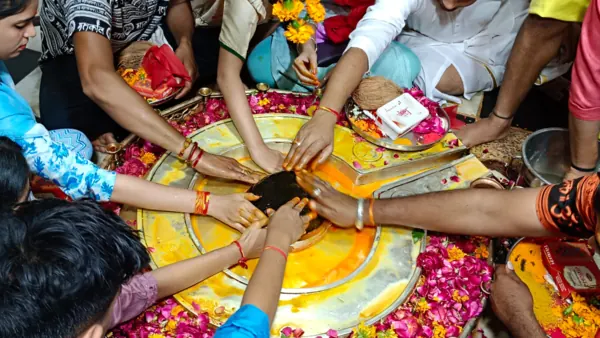
Cooked rice laid over the Shivling — the offering Mangalnath Mandir is known for across the country.
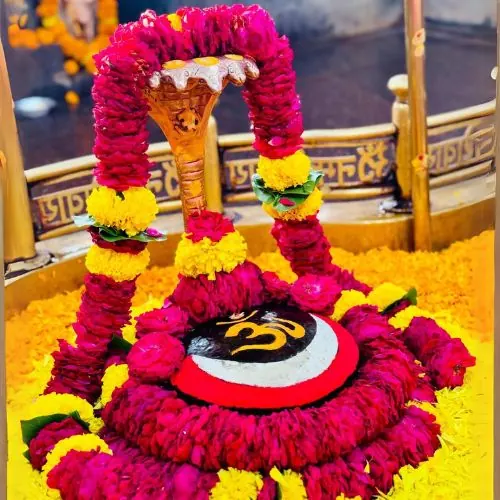
A Rahu–Ketu shanti with Naga puja, for a chart where every graha falls on one side of the nodal axis.

Nine grahas invoked together — each with its own grain, colour and mantra — closed with a havan.
Page reviewed on by the pandits of Mangal Nath Mandir, Ujjain.
Keep the birth details ready and call. The pandit tells you the date, the duration and the dakshina on the same call.