
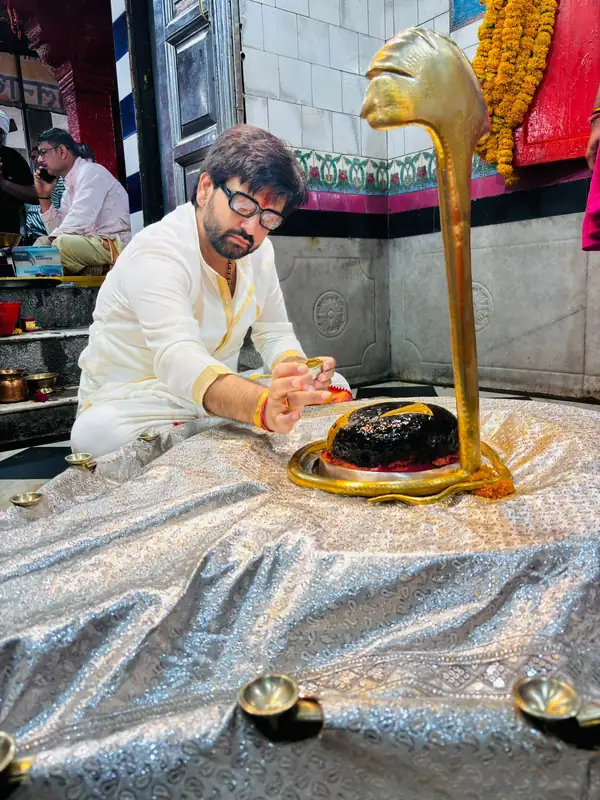
Mangal Dosh Puja in Ujjain
The shanti families book after kundli matching shows Manglik Dosh — done where Mangal is worshipped as Mangalnath.
When every graha in a birth chart falls between Rahu and Ketu, astrologers call it Kaal Sarp Yoga. Ujjain, a Shiva kshetra on the Kshipra, is one of the places where this shanti is traditionally performed — and here it starts with confirming that the yoga is actually present in your chart.
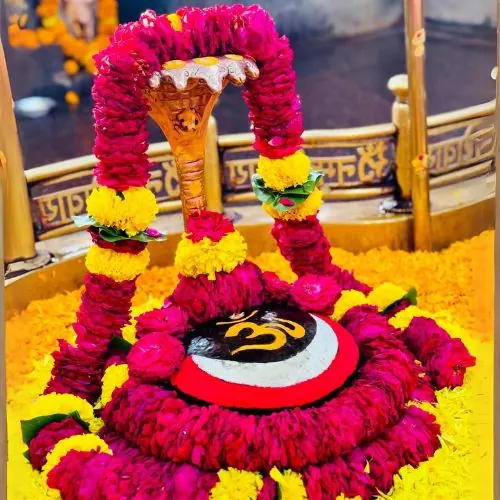
Rahu and Ketu are the two lunar nodes and always sit opposite each other. If the seven grahas from Surya to Shani are all on one side of that axis, the chart is said to carry Kaal Sarp Yoga. If even one graha sits outside, most traditions call it partial.
There are twelve named forms, decided by the houses Rahu and Ketu occupy. The puja is the same in spirit for all twelve, but the sankalp names the specific yoga, which is why the kundli is read first.
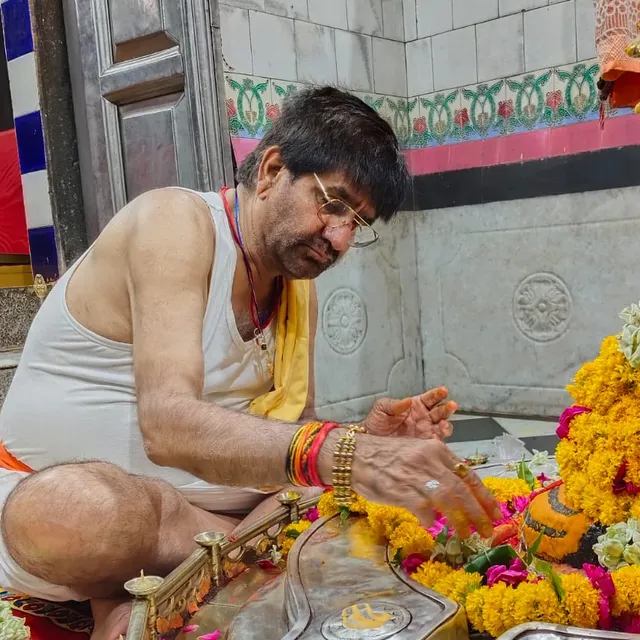
Kaal Sarp Dosh Puja is a shanti of Rahu and Ketu together with worship of the Naga devata and Shiva. It is done once, with full vidhi, in the name of the person whose chart carries the yoga.
Usual duration: about 2 to 3 hours. The order and the mantra count follow what the pandit reads in your kundli, so the timing is confirmed when you book.
| Yoga | Rahu in | Ketu in |
|---|---|---|
| Anant | 1st house | 7th house |
| Kulik | 2nd | 8th |
| Vasuki | 3rd | 9th |
| Shankhpal | 4th | 10th |
| Padma | 5th | 11th |
| Mahapadma | 6th | 12th |
| Takshak | 7th | 1st |
| Karkotak | 8th | 2nd |
| Shankhachur | 9th | 3rd |
| Ghatak | 10th | 4th |
| Vishdhar | 11th | 5th |
| Sheshnag | 12th | 6th |
The dakshina depends on the vidhi your chart calls for — the number of pandits, the mantra jaap and whether a havan is included. It is told to you on the call, in full, before a date is fixed. Samagri is arranged at the temple, so you do not have to shop for it in an unfamiliar city.
Read in Hindi: काल सर्प दोष के 12 प्रकार · काल सर्प दोष की पूजा कैसे होती है
Yes. Ujjain is a Shiva kshetra on the Kshipra and the shanti is traditionally performed here with Naga pujan and Rudrabhishek.
Usually two to three hours, as it includes Rahu–Ketu jaap, Naga pujan, Rudrabhishek and a havan.
The dakshina depends on the number of pandits and the jaap count. It is stated in full on the call, samagri included, before the date is fixed.
Amavasya, Nag Panchami, Mondays and days in Shravan are favoured, but the puja is performed through the year on a muhurat drawn from the chart.
It depends on the houses Rahu and Ketu occupy in the birth chart. Send the birth details and the pandit will tell you, and whether the yoga is full or partial.
It is ordinarily done once with full vidhi. The pandit will tell you if anything further is suggested for your chart.
The shanti families book after kundli matching shows Manglik Dosh — done where Mangal is worshipped as Mangalnath.
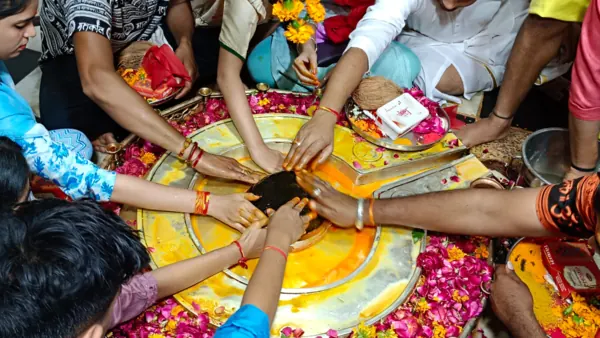
Cooked rice laid over the Shivling — the offering Mangalnath Mandir is known for across the country.
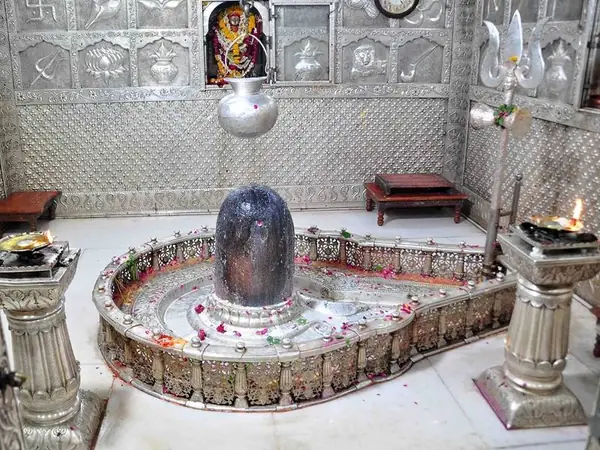
The Tryambakam mantra of Shiva recited in a fixed count by Vedic pandits, with abhishek and a closing havan.

Nine grahas invoked together — each with its own grain, colour and mantra — closed with a havan.
Page reviewed on by the pandits of Mangal Nath Mandir, Ujjain.
Keep the birth details ready and call. The pandit tells you the date, the duration and the dakshina on the same call.