
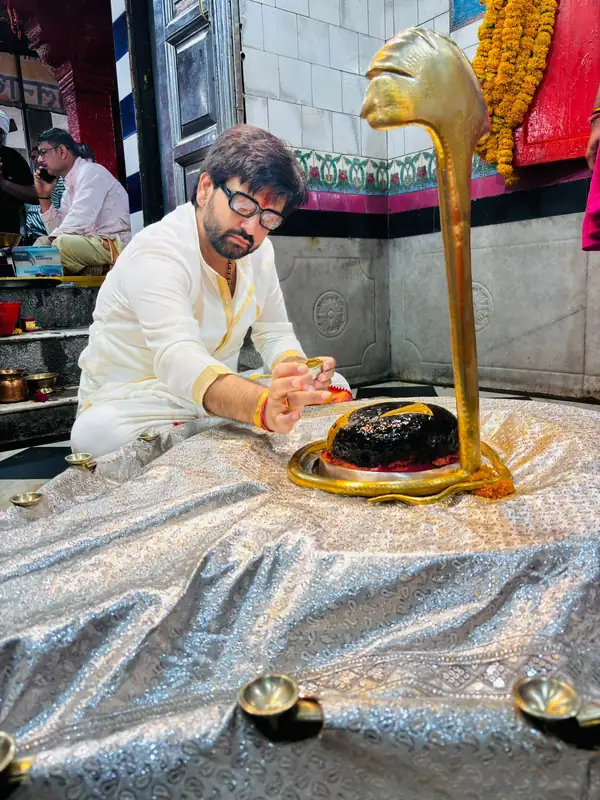
Mangal Dosh Puja in Ujjain
The shanti families book after kundli matching shows Manglik Dosh — done where Mangal is worshipped as Mangalnath.
This website exists for one purpose: so that a family sitting in another city can speak to a pandit of Mangalnath, understand the puja they have been advised, and fix the date before buying a ticket to Ujjain.
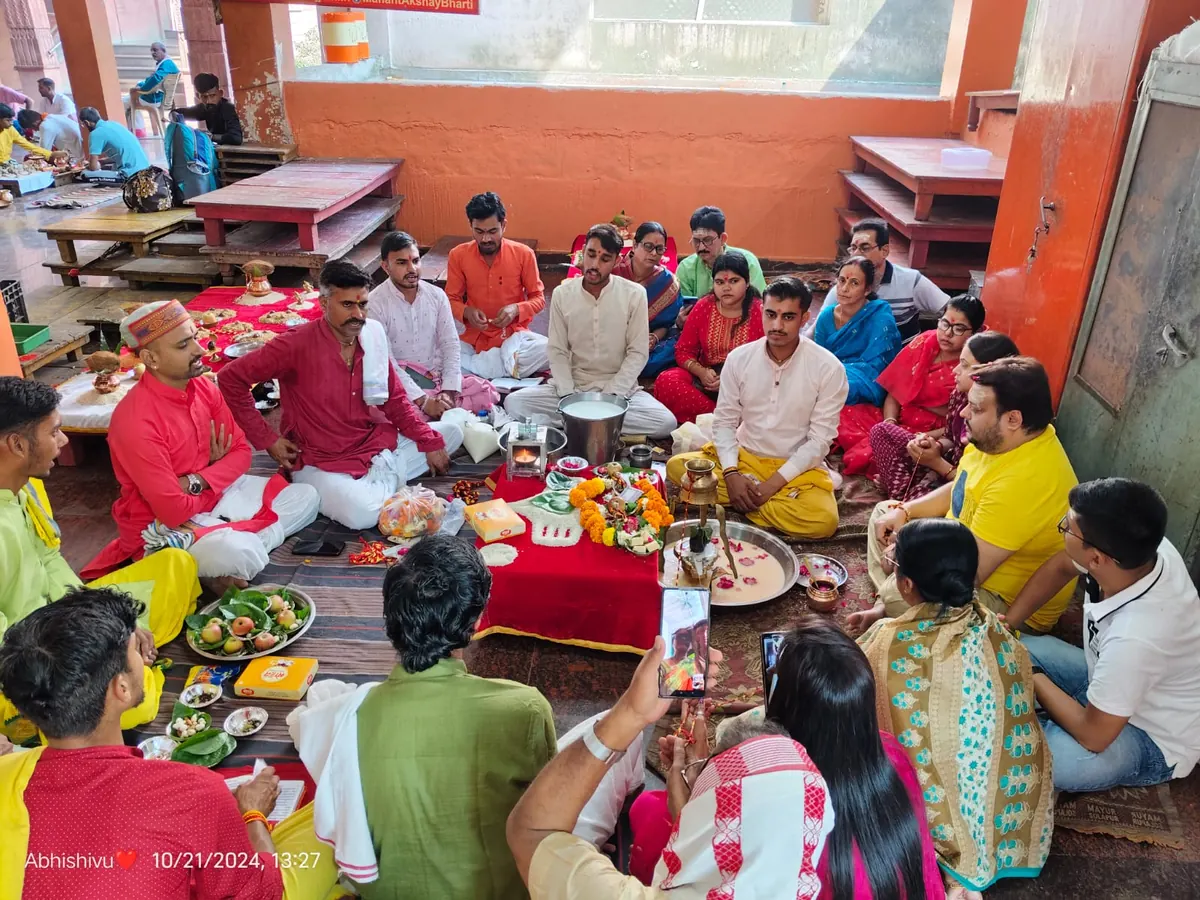
Mangalnath has been served for generations by its pujari families. The Vedic vidhi for Mangal shanti, Bhaat Puja and the graha anushthans is handed down within them, and the pandits who perform pujas here work in that tradition.
No puja is suggested on the strength of a single line in a matching report. The chart is read, and if a puja is not called for, you are told so.
You are told what will be done, in what order, and roughly how long it will take — in Hindi or in English, whichever the family is comfortable with.
The amount, and what it covers, is stated on the call. Samagri is arranged at the temple, so nothing is added on the day.
Every puja is performed for the person or family named in the sankalp, with gotra and birth nakshatra.
Mangalnath stands above the Kshipra on the northern side of Ujjain and is named in the Matsya Purana as the birthplace of Mangal.
The shanti families book after kundli matching shows Manglik Dosh — done where Mangal is worshipped as Mangalnath.
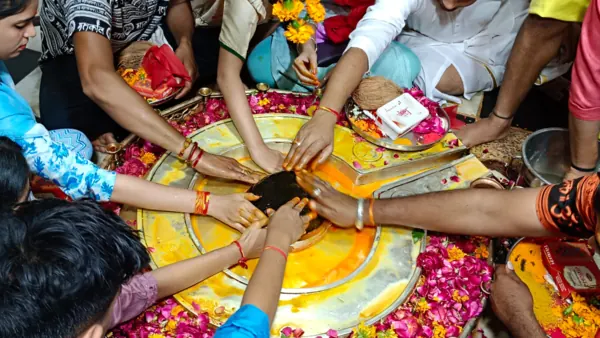
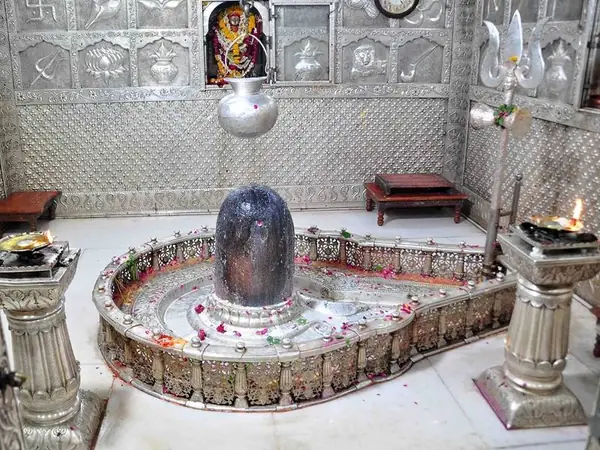
Cooked rice laid over the Shivling — the offering Mangalnath Mandir is known for across the country.
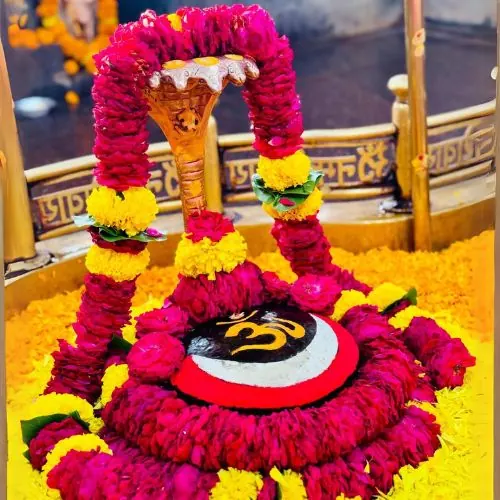
A Rahu–Ketu shanti with Naga puja, for a chart where every graha falls on one side of the nodal axis.
The Tryambakam mantra of Shiva recited in a fixed count by Vedic pandits, with abhishek and a closing havan.

Nine grahas invoked together — each with its own grain, colour and mantra — closed with a havan.
Ask whatever you need to ask about the puja before you decide on a date.